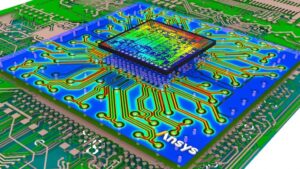
In ASIC Physical Design, mitigating IR drop (voltage drop due to resistance in power delivery networks) is critical for power integrity. Here are key power reduction methods used for achieving a better PPA and to help close on the IR drop limits, along with practical implementations:
1. Power Grid Optimization
A. Mesh Density Enhancement
- Technique: Increase width/spacing of power rails and straps.
- Impact: Reduces resistance ((R = \rho \cdot L/A)) in high-current regions.
- Tool Command (Cadence Innovus):
set_power_ring_strategy -nets {VDD VSS} -width 2um -spacing 1umB. Decoupling Capacitors (Decaps)
- Technique: Place decaps near high-switching logic (e.g., clock buffers, ALUs).
- Impact: Local charge reservoirs suppress transient IR drop.
- Implementation:
add_decaps -cell DECAP_1UM -density 5% -region {x1 y1 x2 y2}
2. Clock Domain Optimization
A. Clock Gating
- Technique: Disable clock trees for idle logic blocks.
- Impact: Reduces dynamic power (switching activity) → lowers peak current.
- Example:
insert_clock_gating -gate_type ICG -threshold 10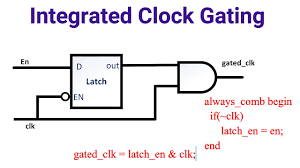
B. Multi-Bit Flip-Flop (MBFF) Merging
- Technique: Combine single-bit FFs into multi-bit FFs.
- Impact: Fewer clock buffers → lower clock network power.
- Tool Command:
set_optimize_registers -merge_flops true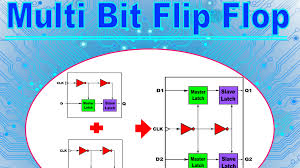
3. Logic & Placement Strategies
A. Voltage Scaling
- Technique: Use Multi-Vt libraries:
- LVT (Low-Vt) for critical paths.
- HVT (High-Vt) for non-critical paths to reduce leakage.
- Impact: Balances performance and IR drop.
- Command:
set_leakage_optimization true -power_driven trueB. Dynamic Voltage Frequency Scaling (DVFS)
- Technique: Adjust voltage/frequency based on workload.
- Impact: Lowers average current demand.
- Implementation: Requires power switches and adaptive clocking.
4. Routing & Signal Integrity
A. Shielding High-Speed Nets
- Technique: Route critical nets (clocks) between VDD/VSS.
- Impact: Reduces crosstalk-induced current spikes.
- Command:
shield_net -net CLK -shield_net VSS -width 0.5umB. Staggered Buffer Insertion
- Technique: Insert buffers in staggered phases.
- Impact: Smoothes di/dt (current slew rate) to avoid IR spikes.
- Example:
set_buffer_opt_strategy -stagger_insertion true5. Advanced Techniques
A. Power Gating
- Technique: Use header/footer switches to shut off power to idle blocks.
- Impact: Eliminates leakage but requires wake-up time.
- Implementation:
insert_power_switch -name PSW -control_signal SLEEP -header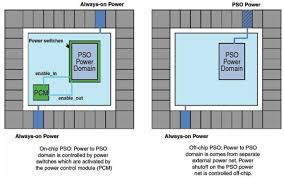
B. TSV Redundancy (3D ICs)
- Technique: Add redundant Through-Silicon Vias (TSVs).
- Impact: Reduces resistance in vertical power delivery.
- Analysis:
analyze_3dic_power -tsv_resistance 0.01 -tier 26. IR-Aware Timing Closure
A. Voltage-Aware STA
- Technique: Use PrimeTime-SI with voltage derating.
- Impact: Accounts for IR drop in timing signoff.
- Command:
set_voltage_derate -drop 0.9V -corner worstB. ECO Fixes
- Technique: Resize cells or add buffers in IR-drop hotspots.
- Example:
eco_add_buffer -cell BUF_X2 -location {x y} -net VDD7. Toolflow for IR Closure
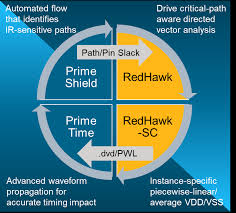
A. RedHawk/Voltus Analysis
# Ansys RedHawk
redhawk_analyze -ir_drop -dynamic -scenario worst_case
B. Power-Aware Place & Route
# Cadence Innovus
set_power_opt_mode -place true -route true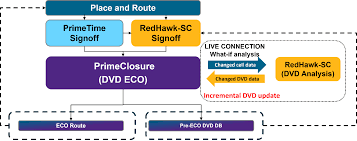
Key Takeaways
- Preventive Measures: Optimize power grid and decap early.
- Dynamic Reduction: Clock gating, MBFF merging.
- Signoff Correlation: Voltage-aware STA and EM checks.
Example Interview Q&A:
Q: “How would you fix IR drop in a CPU block?”
A:
“First, I’d analyze RedHawk reports to identify hotspots. For localized drop, I’d add decaps and widen power straps. For global drop, I’d implement clock gating and use HVT cells in non-critical paths. Finally, I’d validate with voltage-aware STA.”